
The Postmodern Poet
Revisiting The Tortured Poets Department, one year later

Exactly one year ago today, I got on a 7 AM Greyhound bus from Boston’s South Station to New York City. I was heavily considering attending a screenwriting MFA program at NYU in the fall, and realized I couldn’t picture myself in New York because I hadn’t visited it that much. So I packed an overnight bag and left to go visit my Brooklynite friend, Maddy.
On this bus, I had just under five hours to soak in Taylor Swift’s new, enormous, album that had dropped at midnight (and then, again, subsequently, at 3 AM), The Tortured Poets Department. As I stared out at the highway passing by, Massachusetts turning into Rhode Island turning into Connecticut turning into New York, I listened to the full monstrous body of work two and a half times. And once I arrived at Maddy’s apartment and set my bags down, I put it on again another three times. I was just trying to make sense of what the heck I was hearing.
365 days later, I still associate TTPD with that trip to New York, the spring of my senior year of college, and in many ways, the beginnings of my life in New York, where I write to you now, where I am a Brooklynite myself, living with Maddy. And I am still trying to make sense of what I’m hearing.
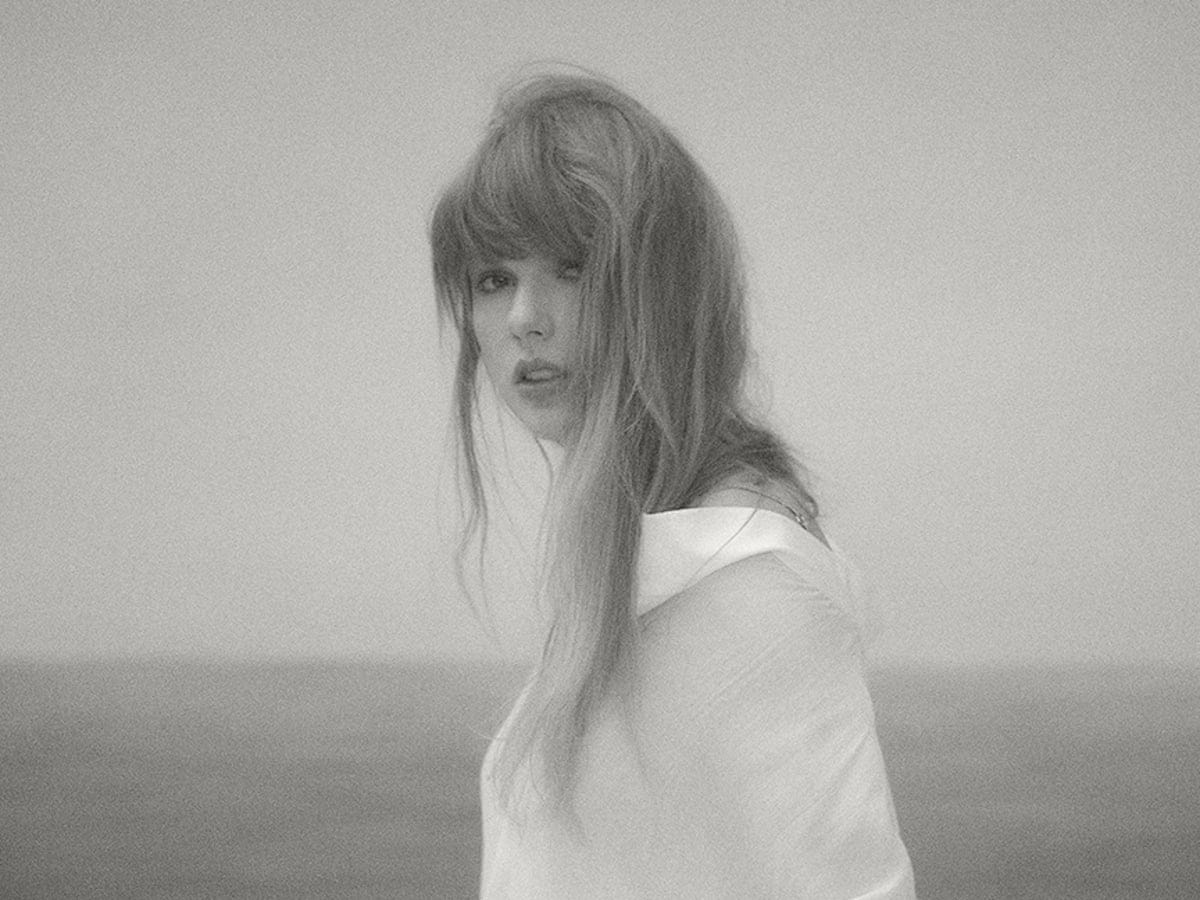
TTPD is a love-it-or-hate-it album. A flop or a cult classic depending on who you ask. In my opinion, TTPD is wildly misunderstood — its controversial announcement and release cycle, its severely underdeveloped visual language, and occasionally corny lyricism and marketing crucially hindered its success.
TTPD is verbosity to the extreme from an infamously wordy artist. There was seemingly no honing process here: I imagine when her collaborators asked which songs were going to end up on the final album, Swift said, “Yes.” Its sprawling sixteen tracks were immediately nearly doubled with the surprise release of The Anthology tracks at 3 AM on the day of the record’s release, bringing the total number of tracks to 31. This doesn’t even count the incessant releases of live versions, acoustic versions, remixes, and more, in the weeks following the album’s release that fans and critics alike saw as a blatant cash grab and “blocking” technique in order to dominate the charts during a busy time for pop music. The original body of work was overwhelmed by the spectacle of the product. But diehard fans want everything Swift has to offer, and they want it now. In that sense, she gave the fans what they wanted — like Britney Spears, it felt like the crowd was saying “gimme gimme more.”
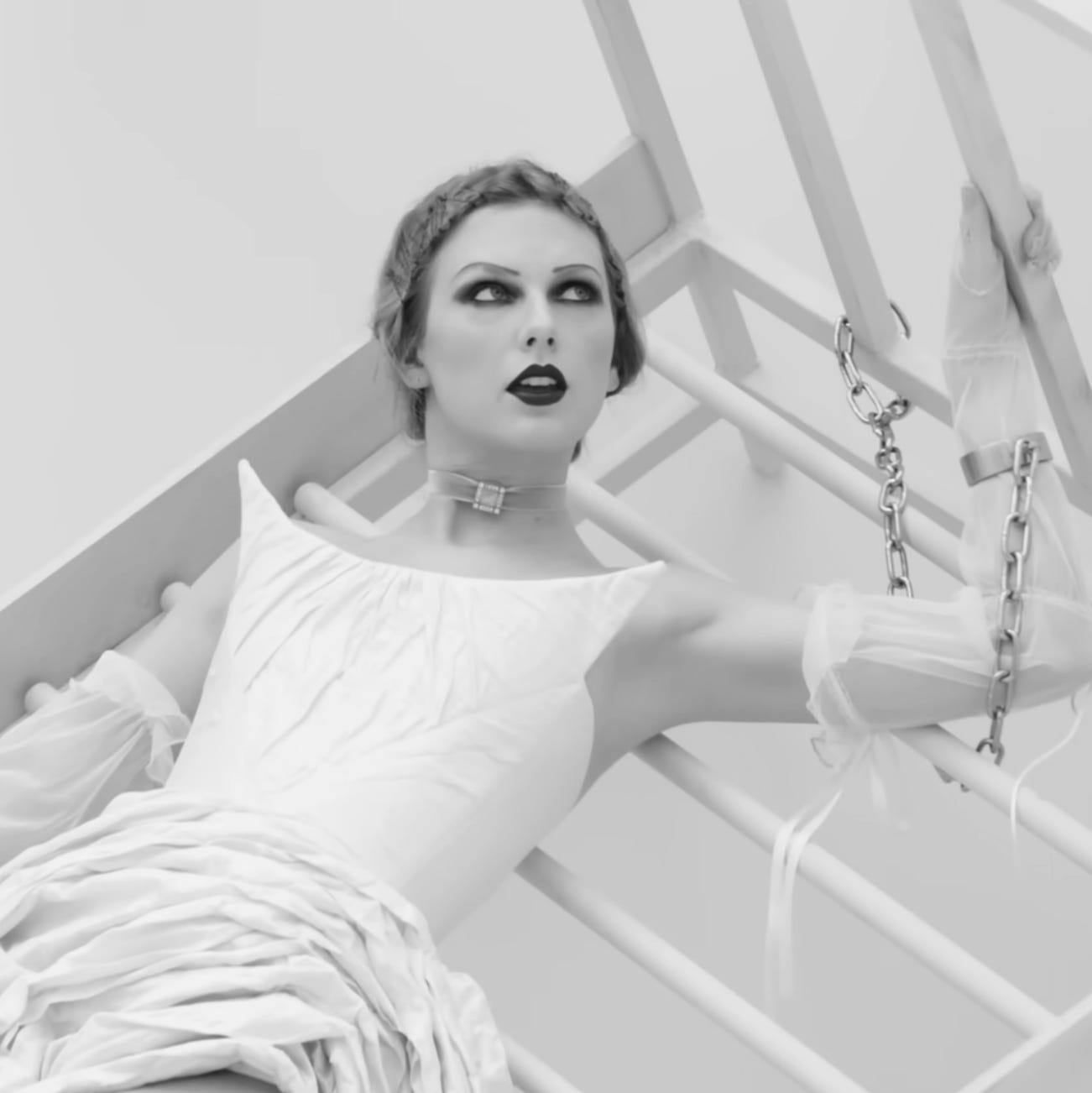
What’s unfortunate is that this overwhelming volume of content, as well as the monolith that was The Eras Tour, which was in its 14,000th consecutive month when this album dropped, overshadowed the quiet pockets of brilliance on TTPD. This is the most Taylor Swift Album to ever Taylor Swift Album — you just have to dig through it a little bit.
What makes a Taylor Swift Album a Taylor Swift Album, you may ask? Even the most apathetic listener could probably tell you: her albums are long. Wordy. Full of a mix of radio-friendly ear worms and devastating ballads. She writes about fairy tales, about teen-angst levels of obsession and heartbreak. She rhymes “bar” and “car” at least once or twice every album (that one might just be for the dedicated Swifties).
TTPD takes a — yeah, I’m gonna say it — postmodern approach to a Taylor Swift Album. It is like an alien came down to earth (for a moment, I knew cosmic love), and was told to absorb all of her discography and public image, then reproduce it, but with the volume on everything turned up to a thousand. It is the Taylor Swift Album that is reliant on the conviction that — due to this new level of heartbreak and subsequent madness she experienced — it is no longer possible to rely upon her previous ways of depicting the world. And so what does she do? She turns it on its head, and makes a caricature of her Self.
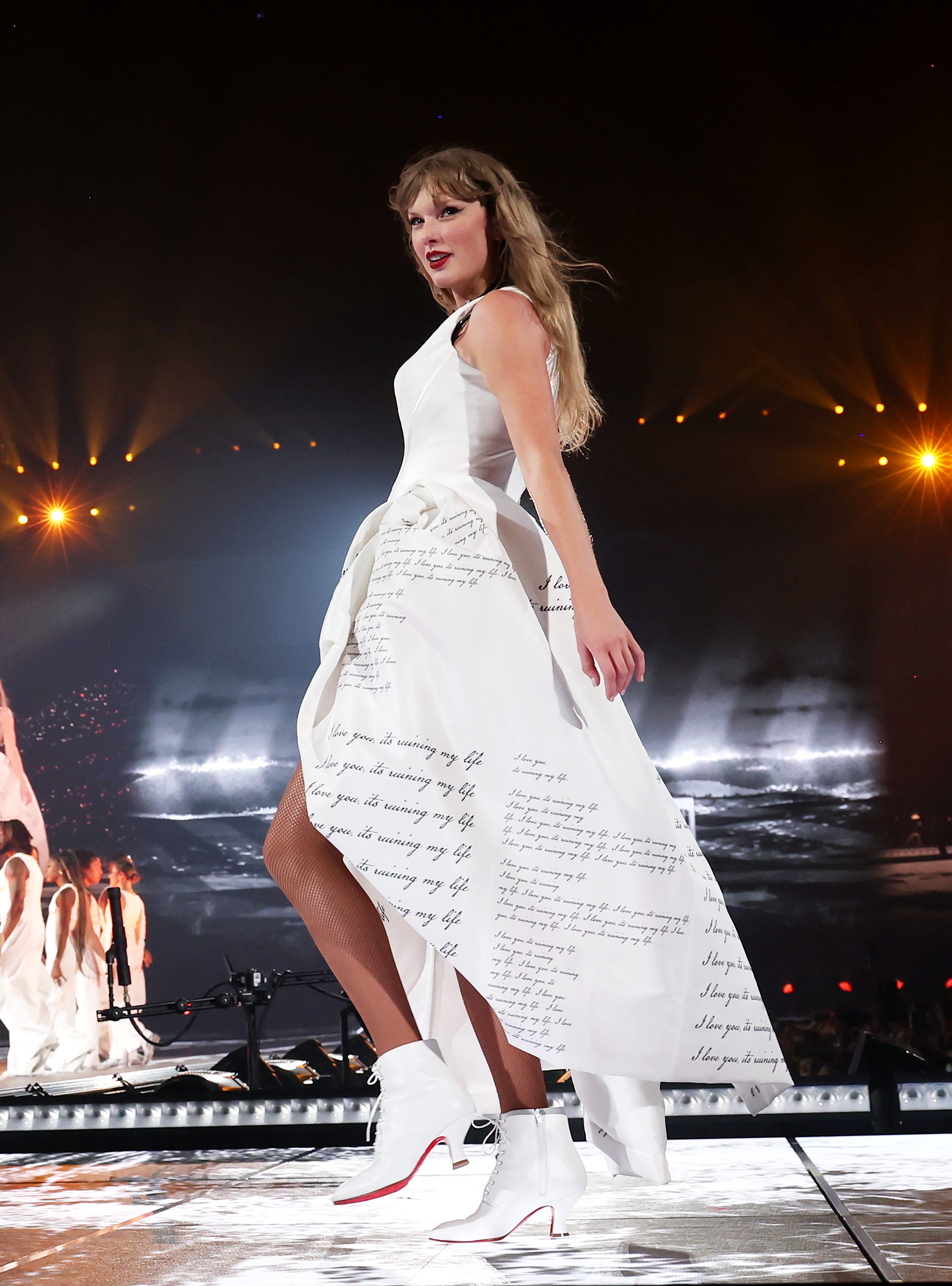
Take the long tracklist: one of the hallmarks of the postmodernism movement was its evolution away from abstraction and subjectivity to the overly-familiar and mass-produced. (Think: Andy Warhol Campbell’s soup cans.) Postmodernism supplants moral, political, and aesthetic ideals with style and spectacle — the two words that perhaps best describe The Eras Tour. After all, without visual style and glittering spectacle, the very concept of Eras falls apart. Rather than the purity of a single-era tour (in which Taylor might perform songs from her early discography, but stylized to match the album cycle, or “era” she was currently in), postmodern Taylor puts on an eclectic style, employing every genre and mode she’s ever worked in.
This not only applies to the setlist of The Eras Tour, but to TTPD’s songs. Each track could comfortably be placed onto another T-Swift album. You have the folklore/evermore-ish stripped-down storytelling tracks in “loml,” “The Albatross,” “Chloe or Sam or Sophia or Marcus,” “How Did it End?” “I Hate it Here,” “The Prophecy,” “Cassandra,” “Peter,” and “The Bolter.” There’s the distinct high-hats and dark persona crafted in the reputation era found in songs like “Fortnight,” “Down Bad,” “Florida!!!” “Who’s Afraid of Little Old Me?” “The Alchemy,” “imgonnagetyouback,” and “thanK you aIMee.” There’s even the country-influenced melodrama of Speak Now and Red found in songs like “But Daddy I Love Him,” “Fresh Out the Slammer,” “Guilty as Sin?” and “I Can Fix Him (No Really I Can).”
And speaking of these insane song titles, which I’m so glad you brought up, I’d argue that the literal tracklist itself is a postmodern work in its employment of cultural signs. Songs like “But Daddy I Love Him,” “Who’s Afraid of Little Old Me?” “I Can Fix Him (No Really I Can),” “loml,” and “thanK you aIMee” are all direct references to other pieces of mass media and internet memes and vernacular: The Little Mermaid, Who’s Afraid of Virginia Woolf, memes about women insisting that “I can fix him,” text-speak for “love of my life,” and EVEN Swift’s own tradition of capitalizing certain letters in her lyric booklets to spell out secret messages about who/what a given song is about (in this case, painfully obviously, Kim Kardashian).
The ironic articulation of the “already said” is a distinguishing feature of postmodernism — Italian philosopher Umberto Eco (yeah, we’re getting philosophers involved, it’s that serious) gave the example of the difference between telling your lover, “I love you madly,” and perhaps getting a laugh, as opposed to saying, “As Barbra Streisand would say, ‘I love you madly.’” The latter example demonstrates a shared understanding of the “already said,” and a mutual appreciation of appropriating for one’s own purposes. TTPD is very self-referential in this way, with constant winks from Taylor at the camera like Jim in The Office. She even literally says her own name and comments on her legacy in the female-superstar-canon in the song “Clara Bow:”
You look like
Taylor Swift
In this light
We’re loving it
You’ve got edge
She never did
The future’s bright, dazzling
The hyperconsciousness of the self is a hallmark of the Taylor Swift Album — but this is the first time she feels truly self-referential, borderline saying, “As Taylor Swift would say…” In this same vein, she leans heavily into fan theories and lore and relationship speculation to the max. In the weeks leading up to the album’s release, fans prepared for a eulogy to her long-term relationship with actor Joe Alwyn, and were instead treated to a chapter-by-chapter recounting of her whirlwind rekindled situationship with former flame Matty Healy, causing fans to revisit songs from past albums with this new lens — is “Question…?” about him? Is “Maroon”? Is “cardigan”? Fuck it, is “Love Story”? The work itself cannot be extricated from the public nature of her personal life, and this cultural knowledge is imperative to the consumption of the record.
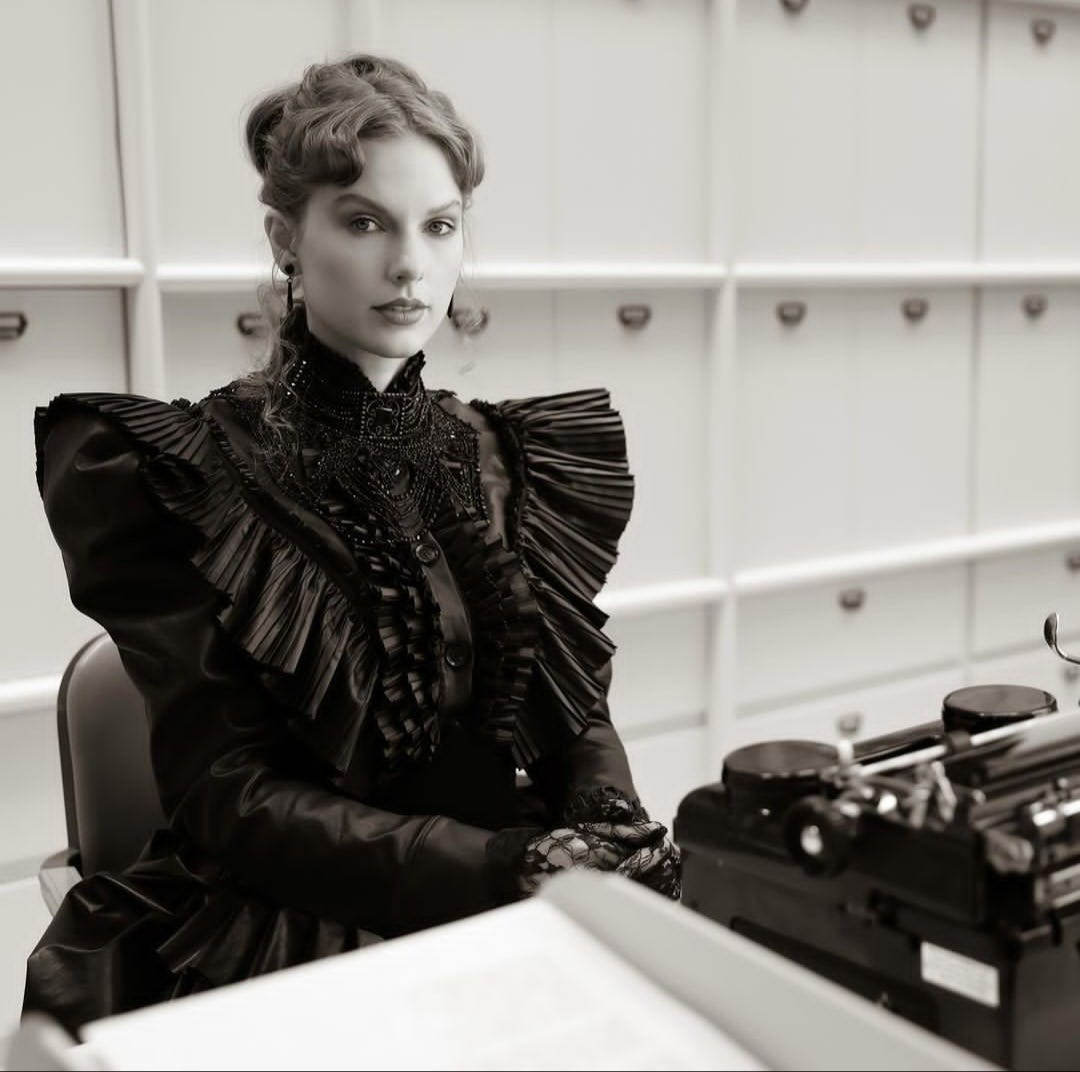
I don’t think Swift’s sense of humor and irony is appreciated enough on TTPD — everything she says is taken at face value a) because people never think women know how to make a joke and assume they’re serious all the time and b) because earnestness is a trademark of her music. (This argument, however, does NOT apply to Katy Perry’s “Woman’s World.”) But the narrator of TTPD isn’t really the Taylor we think we know; rather, she is a caricature, almost a parody. Every moment of melodrama — once an earnest expression of her teenage and young adult years — is now the bitter sense of humor often developed by those who are truly Down Bad.
They shake their heads, saying, “God help her”
When I tell ‘em he’s my man,
but your good Lord doesn’t need to lift a finger,
I can fix him, no, really, I can
She is making fun of herself here, and referencing that all-too-understandable feeling of If I just stick around a little longer, if I just do this or that, then this will be perfect. Which it never is. She isn’t actually telling us that she thinks she can fix him — she’s being sar-fucking-castic.
(Mr Steal-Your-Girl, then make her cry in what is possibly one of the saddest songs in her entire catalogue is another prime example of this.)
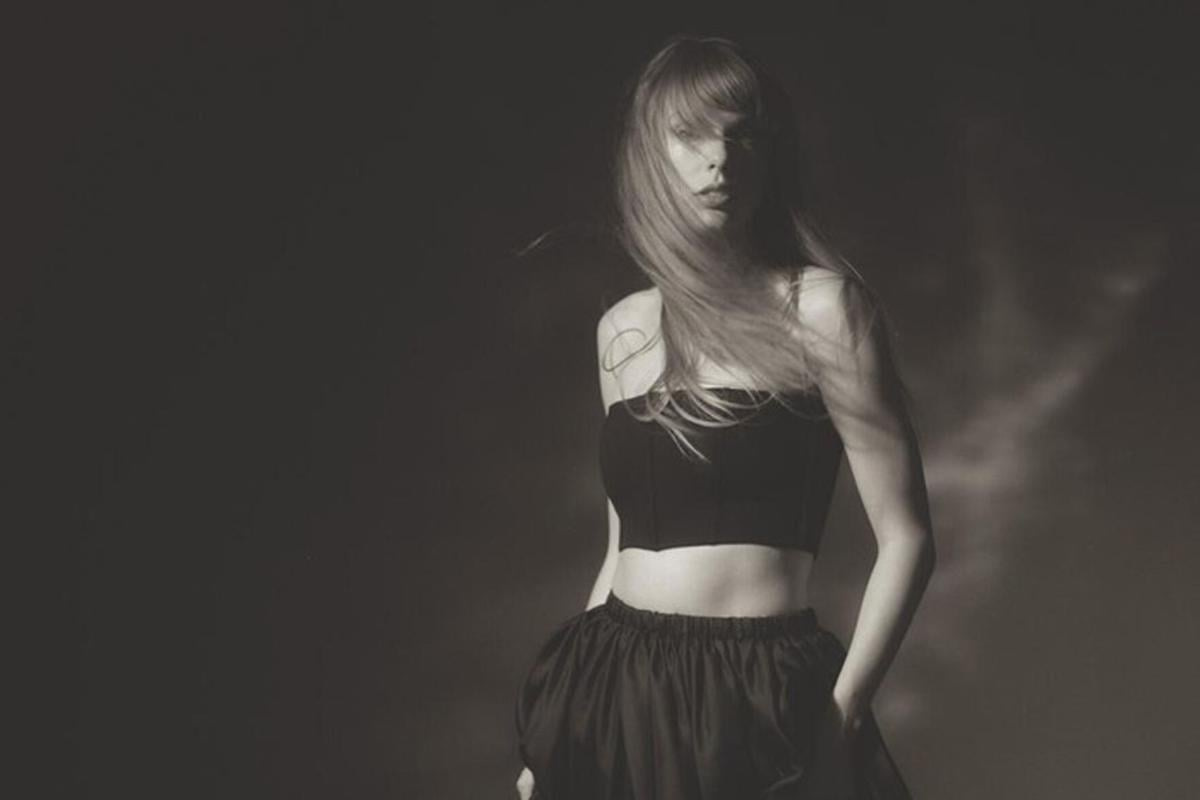
TTPD is by no means a perfect album — I will be the first to admit that there are a handful of tracks I have only listened to once or twice because I dislike them so much, and I wish she had been more willing to “kill her darlings” so to speak. But as I look back on a year of this album existing, I think it comes at a super pivotal point in her career — a moment of deep reflection, of re-creation, what with The Eras Tour, the Taylor’s Version re-recorded albums, and now this new record full of the ghosts of her past — both sonically and in its primary muse. But its brilliance and perhaps biggest faults are both in this very return to form for Swift.
I leave you with a poem included in the physical copies of TTPD, titled “In Summation,” which I think gives vital context to the process of its creation, and demonstrates this simultaneous return and rejection of form due to Swift’s less-than-clear headspace when working on it.
At this hearing
I stand before my fellow members
of the Tortured Poets Department
With a summary of my findings
A debrief, a detailed rewinding
For the purpose of warning
For the sake of reminding
As you might all unfortunately recall
I had been struck with a case
of a restricted humanity
Which explains my plea here today
of temporary insanity
You see, the pendulum swings
Oh, the chaos it brings
Leads the caged beast to do
the most curious things
Lovers spend years denying what’s ill fated
Resentment rotting away
galaxies we created
Stars placed and glued
meticulously by hand
next to the ceiling fan
Tried wishing on comets.
Tried dimming the shine.
Tried to orbit his planet.
Some stars never align.
And in one conversation, I tore down the whole sky
Spring sprung forth with dazzling freedom hues
Then a crash from the skylight
Bursting through
Something old, someone hallowed,
who told me he could be brand new
And so I was out of the oven
And into the microwave
Out of the slammer and into a tidal wave
How gallant to save the empress
from her gilded tower
Swinging a sword he could barely lift
But loneliness struck at that fateful hour
Low hanging fruit on his wine stained lips
He never even scratched the surface
of me.
None of them did.
“In summation, it was not a love affair!”
I screamed while bringing my fists
to my coffee ringed desk
It was a mutual manic phase.
It was self harm.
It was house and then cardiac arrest.
A smirk creeps onto this poet’s face
Because it’s the worst men that I write best.
And so I enter into evidence
My tarnished coat of arms
My muses, acquired like bruises
My talismans and charms
The tick, tick, tick of love bombs
My veins of pitch black ink
All’s fair in love and poetry
Sincerely,
The Chairman
of The Tortured Poets Department
Sources:
Channels of Discourse, Reassembled: Television and Contemporary Criticism, Second Edition, edited by Robert C. Allen
https://en.wikipedia.org/wiki/Postmodernism
I don’t religiously listen to TS, but I did listen to TTPD (the name spoke to me, so I did indeed make a judgement based on its cover), and I did hang onto every word in this article. So good, Julia!!! Brilliant analysis from a devoted fan and a balanced outlook from an appreciator of the greater arts. Yay writing and music and tortured poets